Chapter 7 · the service
Point it at real audio
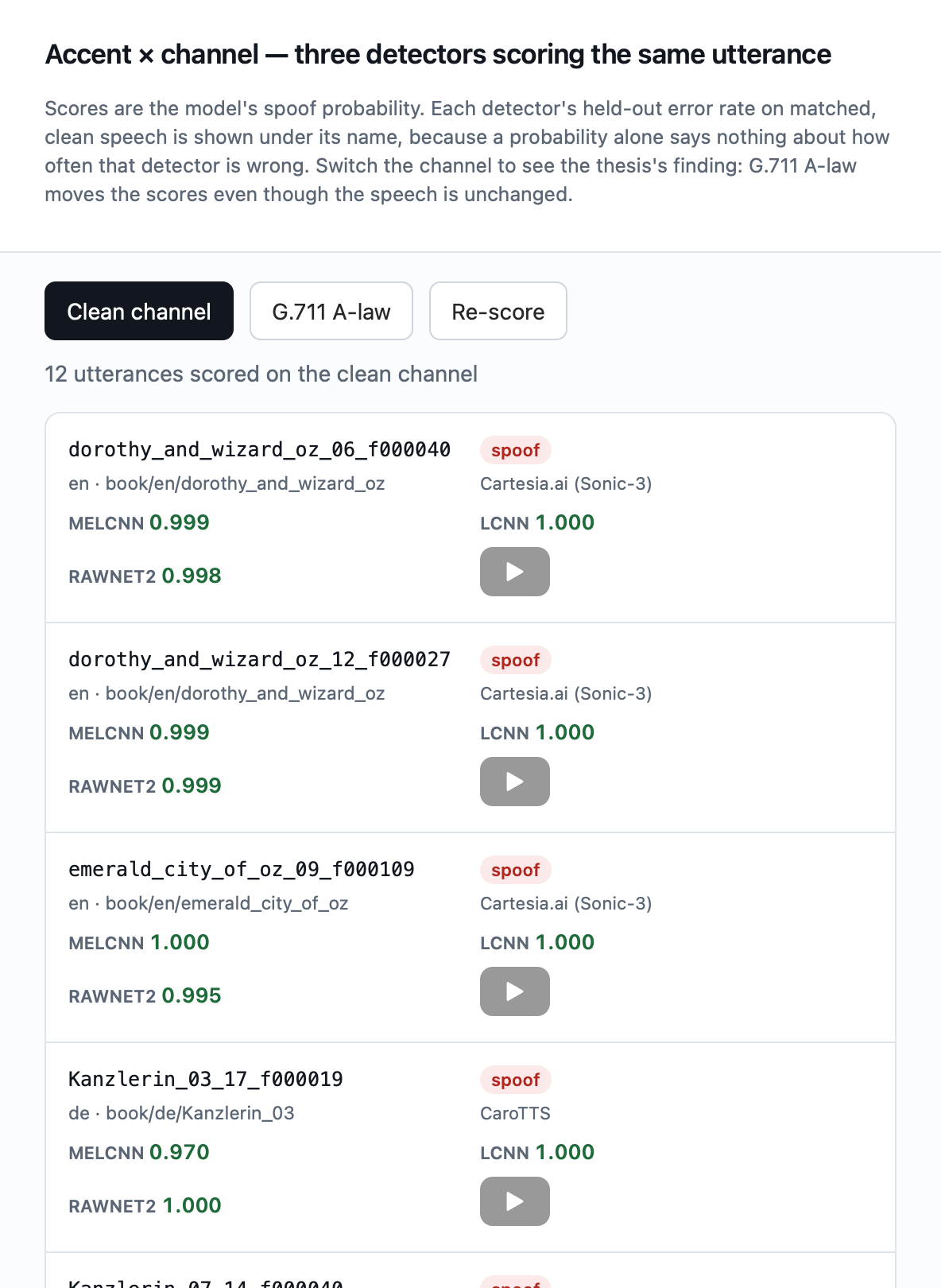
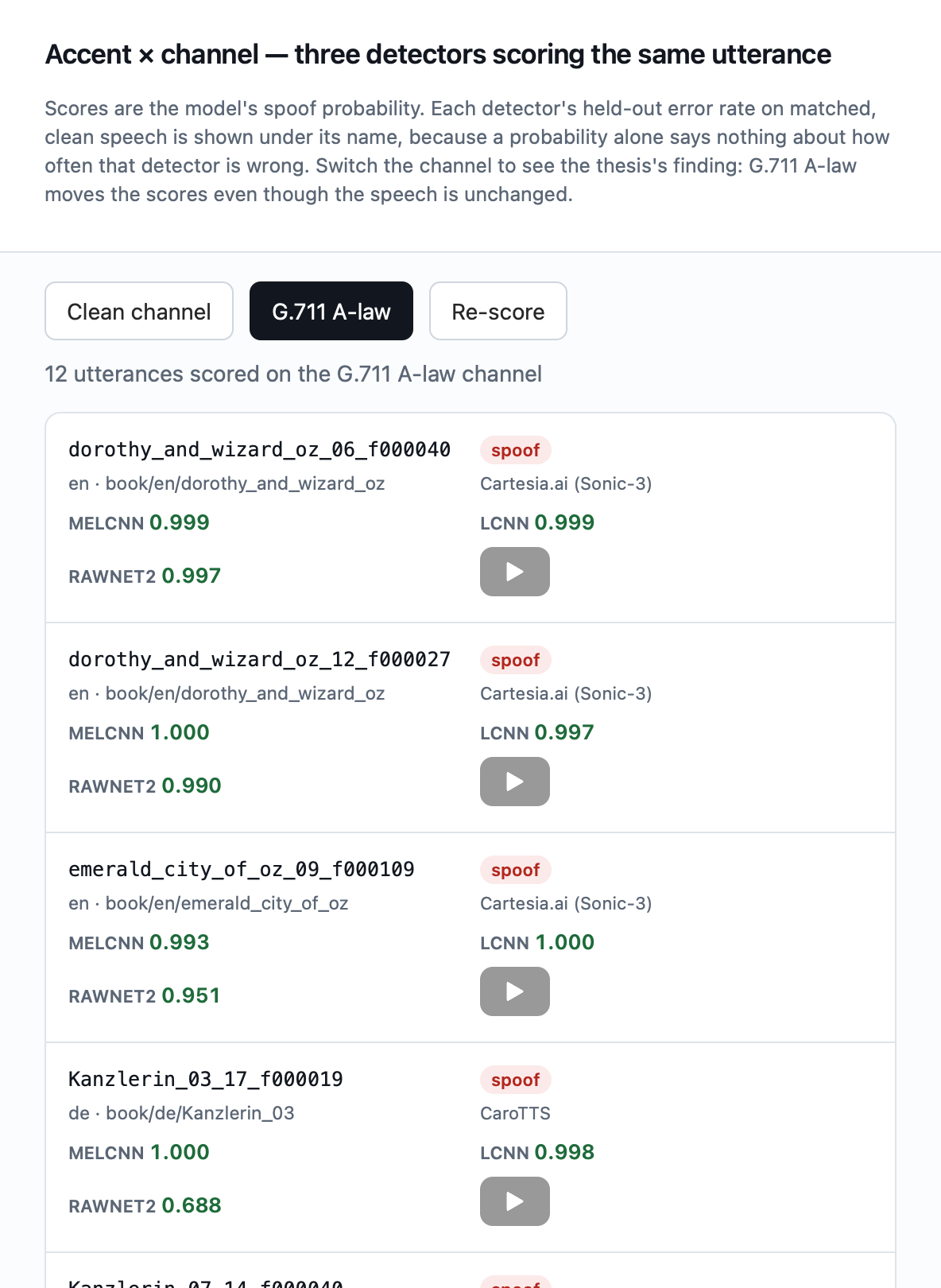
The claim is easier to believe when you can watch it happen. Twelve utterances, three detectors, scored twice: once as recorded, once after the real G.711 A-law transcoder. The speech never changes.
The shift, measured
The same speech, a different verdict
Each row is one utterance. The two numbers are the spoof probability the detector gives it before and after the codec. A large shift means the channel, not the speech, is doing the work.
| Utterance | true label | clean | G.711 A-law | shift | verdict after codec |
|---|
Mean score shift under G.711, per detector, over the twelve utterances. Direction differs by detector — the same sign dependence the four-cell experiment reports at corpus scale, visible here in twelve rows.
What it looks like
The page the service serves
A row per utterance: the true label, the three spoof probabilities, and playback of the exact audio that was scored. Correct verdicts are green, wrong ones red, so the error pattern is visible without reading a number.
Why the demo exists
The mistake it was built to prevent
The first version of this service read the wav and fed the samples straight to the network. It scored every bona fide file as a fake — not because the detector was wrong, but because it had skipped the loudness normalisation the evaluation pipeline applies. The demo now calls the same scoring function the thesis numbers come from, so the crop, the normalisation and the per-utterance standardisation cannot drift apart from the evaluation. A test asserts the deployed service's scores match the evaluator's.
This is the failure mode a screenshot cannot catch: a service that looks correct, returns plausible numbers, and is measuring a different signal than the paper it is demonstrating.